
In recent years, we’ve witnessed a true revolution in the field of hair loss treatment and follicle regeneration. PRP therapy, which harnesses the body’s natural healing powers, has become one of the most sought-after and effective solutions available. When you’re considering this treatment, it’s important to understand exactly what to expect from PRP hair treatment. We’ve created this quick guide to help you build realistic expectations and understand every stage of the process, so you can make an informed decision and begin your journey toward fuller, healthier hair.
The Healing Foundation: How Platelet-Rich Plasma Restores the Scalp
To understand what PRP can do, we must first understand how it works—and what makes it so powerful. PRP is a regenerative medical procedure that leverages your body’s natural healing capabilities. At PRP Clinic, we draw a small amount of your blood, process it in an advanced centrifuge, and isolate the platelet-rich plasma. These platelets contain a very high concentration of growth factors and essential proteins—the body’s natural repair and regeneration materials.
These growth factors, normally released during wound healing, act as biological boosters when injected into the scalp. By delivering PRP directly into thinning areas, we “wake up” dormant hair follicles, improve local blood flow, and stimulate cellular regeneration within the hair bulb. This creates a stronger and healthier environment for hair growth. All treatments are performed exclusively by trained physicians with extensive experience in PRP and aesthetic medicine, ensuring maximum safety and quality throughout the process.
What to Expect from PRP Hair Treatment?
It’s important to be clear: PRP is a regenerative treatment—not a magic cure. It is particularly effective when hair follicles are still present (active or dormant) and is not suitable for areas of complete baldness. Our goal is to strengthen existing hair and encourage new growth where possible. Since optimal results develop gradually, you should understand what to expect from PRP hair treatment in terms of outcomes.
Slowing Hair Loss: Stopping the Decline
The first and most common expectation from PRP is a significant slowdown in shedding—often between 50% to 70% in many cases. This is a crucial result, allowing existing hair to remain anchored and healthier on the scalp. In fact, this benefit alone often justifies choosing PRP hair treatment.
Most patients notice a reduction in shedding about 1–2 months after the first session—the earliest sign that follicles are responding to the nourishment.
Thickening and Strengthening Hair: Enhancing Hair Quality
PRP also strengthens existing follicles. Growth factors reinforce the roots, thicken the hair shaft, and extend the growth phase. The result: hair that appears fuller, shinier, healthier, and more voluminous.
Noticeable thickening usually appears 4–6 months after starting treatment. Women may require a slightly longer timeline due to hormonal growth cycles. This is one of the key advantages of PRP hair treatment.
New Hair Growth: Awakening Dormant Follicles
In some cases, PRP even stimulates new hair growth in thinning zones. This occurs when dormant follicles (in the telogen phase) re-enter an active growth phase. PRP has proven effective as a core treatment in androgenetic alopecia (pattern hair loss), postpartum hair loss, and shedding caused by certain medical conditions.
Remember: new growth appears gradually. We use innovative, personalized protocols so you will understand exactly what to expect from PRP hair treatment at each stage.
Expected Timeline for PRP Hair Results
To help you plan your journey and set proper expectations, here is a summary timeline based on our clinical experience:
| Stage / Key Result | When Results Typically Appear | Required Treatment Duration |
|---|---|---|
| Slowing Hair Loss | 1–2 months after first treatment | Initial series (3–5 sessions) |
| Thickening & Strengthening Existing Hair | 4–6 months after starting treatment | Initial series (3–5 sessions) |
| Maintenance & Future Hair Loss Prevention | After completing the initial series | Maintenance treatments every 6–12 months |
Of course, results vary between patients. These are general guidelines based on extensive clinical practice. Adherence to the full recommended protocol—including maintenance sessions—is the key to preserving long-term results and preventing regression.
The Regeneration Journey: How PRP Treatment Is Performed
Achieving healthier, fuller hair requires commitment. PRP hair therapy is not a one-time treatment—it involves a personalized series of sessions followed by periodic maintenance.
The process always begins with a thorough medical consultation, during which the physician examines your scalp, medical background, and contributing factors to your hair loss. Based on this assessment, a customized treatment plan will be recommended.
Treatment Phases
-
Initial Phase (Results Phase): 3–5 treatments spaced 4–8 weeks apart
-
Maintenance Phase: 1 session every 6–12 months to preserve the improvement
Consistency is essential for visible, lasting results.
Inside the Procedure: Performed Under Strict Medical Standards
Blood Draw:
A small sample of venous blood is taken from your arm.
Processing:
The blood is placed in a specialized centrifuge to isolate the platelet-rich plasma.
Injection:
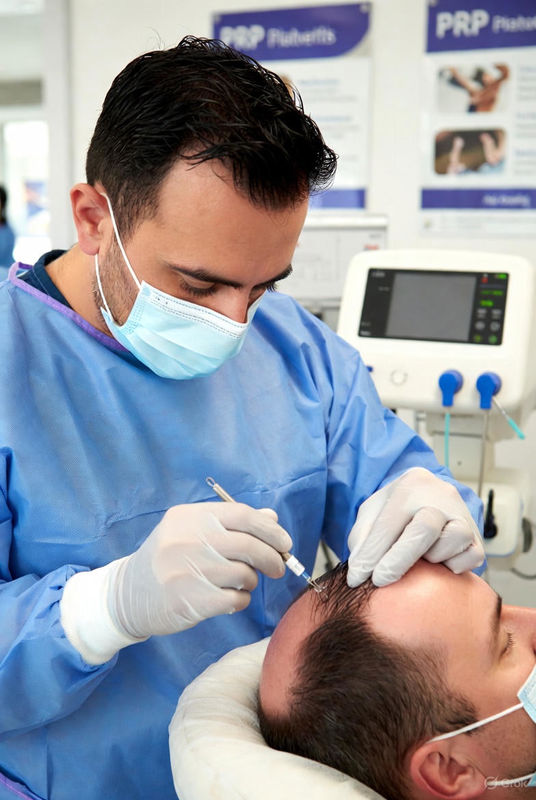
The PRP is injected by the physician directly into thinning areas across the scalp.
Safety and Side Effects: What You Should Know
PRP is considered extremely safe because it uses autologous materials—your own biological substances. No foreign materials are introduced, which means the risk of allergic reaction is virtually zero.
Most patients experience no side effects at all after PRP hair treatment. When side effects do occur, they are typically mild, temporary, and resolve quickly.
Possible Side Effects After PRP Hair Treatment
-
Mild injection-site discomfort: Usually minimal, lasting 1–2 days. Local numbing is used to reduce discomfort.
-
Redness: Uncommon, more typical in very fair skin, resolves within 1–2 days.
-
Sensitivity or tingling: May occur but typically fades within 24 hours.
-
Swelling: A rare side effect, usually appearing in women; typically resolves gradually within 7–10 days.
In most cases, patients can return to normal activity almost immediately, unlike other more invasive procedures. PRP hair therapy requires no downtime, unlike orthopedic PRP performed for joint injuries.
Who Is PRP Hair Treatment For—and What Are Its Limitations?
Our experience allows us to tailor PRP protocols precisely. The treatment is particularly suitable for individuals who experience mild to moderate hair loss, including:
-
Men and women in the early stages of androgenetic alopecia
-
Women experiencing postpartum or hormonally triggered shedding
-
Individuals with thinning hair or weak, lifeless strands
Limitations and Cases Where PRP May Not Be Effective
We are committed to transparency. PRP is not ideal in the following cases:
-
Long-standing complete baldness: Follicles are already fully atrophied; hair transplantation is recommended.
-
Certain medical conditions: Active cancer or specific autoimmune disorders may prevent treatment. A clinical consultation is required.
-
Certain medications: Some drugs may weaken or counteract PRP effectiveness (e.g., steroids, certain antibiotics). A physician must review your medications before treatment.
If PRP is unlikely to help you, we will inform you honestly and refer you to the appropriate specialist. Our goal is to ensure you always understand what to expect from PRP hair treatment and receive the best possible medical care.
The Path to Fuller Hair: Final Thoughts
We are proud to be part of your journey toward improved hair density and renewed confidence. Throughout this guide, we’ve reviewed what to expect from PRP hair treatment—from the scientific foundation of platelet-rich plasma to realistic expectations of results. We learned that PRP significantly slows shedding, thickens existing hair, and often stimulates new growth in dormant follicles.
The procedure is safe, medically supervised, and fully personalized for each patient. If you’re ready to take the first step in restoring your hair, our professional team will be happy to guide you.